Shocks and struts do not fail all at once. They wear a little every month, so the car you drive around Lincolnton feels normal to you even as it gets worse. By the time the bounce is obvious, the tires and brakes have usually been paying for it for a while.
That slow fade is why this topic works best as a calendar. Nothing here happens on one bad day. It builds across seasons, across miles, and across the kind of driving most people in Lincoln County do every week: short trips, a highway stretch, a rough side road, and a lot of stop-and-go in between.
What shocks and struts actually do
Your springs carry the weight of the car. Shocks and struts control what happens after the spring moves. Without that control, the tire would keep bouncing after every bump instead of staying planted on the pavement.
A strut is also part of the structure. On many cars the front struts help hold the steering geometry in place, so a worn strut can change how the car tracks and how the front tires wear. A shock absorber, by contrast, is usually just a damper bolted alongside the suspension. Both jobs matter, but a strut replacement is the bigger job because alignment is part of putting things back right.
When damping fades, three things follow. The car takes longer to settle after a dip. The nose dives harder under braking. And the tire spends less time in full contact with the road, which is exactly when you need grip most.
The signs you can feel from the driver seat
Start with the bounce test in your own driveway. Push down hard on one corner of the car and let go. A healthy corner rises and settles. A worn corner keeps bobbing. It is a crude test, but a car that bounces two or three extra times is telling you something real.
On the road, watch for nose-dive when you brake, a lean that feels loose in a turn, and a rear end that squats when you pull away. Another clue is cupping on the tires, a scalloped wear pattern you can feel with your palm. Cupping means the tire has been hopping instead of rolling smoothly.
Drivers in Lincolnton often notice it first on familiar roads. The railroad crossing that used to be a thump becomes a float. The dip at the end of the street takes longer to settle. That change in a road you know well is worth trusting.
A simple calendar for the year
You do not need to replace parts on a schedule. You do need to look on a schedule. The table below spreads the checks across the year so none of them get forgotten.
| When | What to check | What you are looking for |
|---|---|---|
| Early spring | Bounce test and tire tread | Extra bounce, cupped or uneven tread after winter potholes |
| Late spring | Visual check at tire rotation | Oil leaking down the shock or strut body, cracked dust boots |
| Midsummer | Braking feel on a quiet road | Nose-dive, longer stops, or a pull under hard braking |
| Early fall | Full suspension look on a lift | Worn mounts, loose links, and tired bushings alongside the dampers |
| Late fall | Handling in wet weather | Floating, wandering, or poor grip on wet pavement |
| At 50,000 miles and beyond | Straight conversation about replacement | Whether wear, leaks, and tire damage add up to a yes |
The 50,000-mile mark comes up often because that is roughly where many original dampers have lost a noticeable share of their control. It is not an expiration date. A car driven gently on smooth roads may go longer. A car that hauls loads or spends its life on rough pavement may need attention sooner. Mileage starts the conversation. Condition finishes it.
Why waiting costs you tires and stopping distance
A tire that hops wears in patches. Once cupping starts, rotating the tires spreads the noise around but does not undo the wear. Leave worn dampers long enough and you can shorten the life of a good set of tires by a lot.
Braking suffers too. When the nose dives, weight shifts forward in a rush and the rear tires unload. The car still stops, but it takes more distance and feels less settled doing it. In a sudden stop on wet pavement, that difference matters more than any other symptom on this list.
Other parts take extra work as well. Sway bar links, control arm bushings, and strut mounts all absorb movement the damper was supposed to control. Replacing a damper early is a contained job. Replacing it after it has worn out its neighbors is not.
What a shop check adds
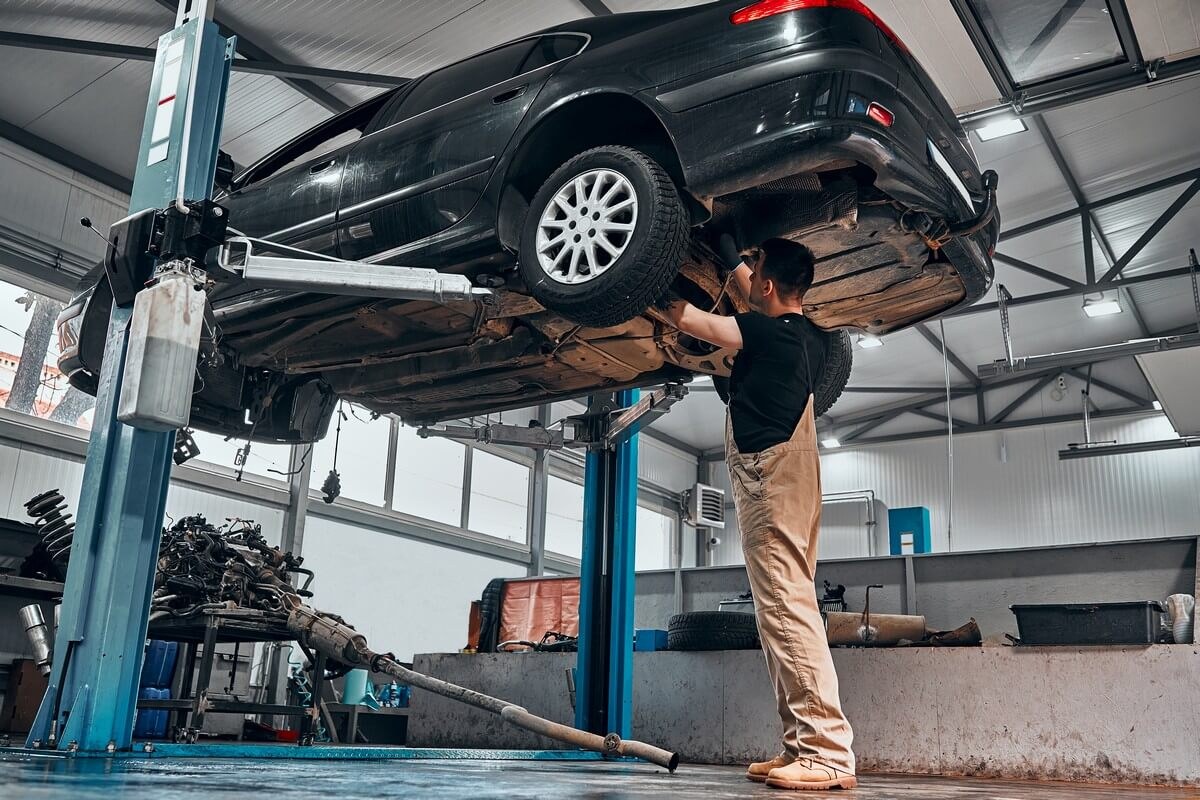
A driveway test cannot see a seeping strut behind a coil spring or a mount that has started to crack. On a lift, a technician can check for leaks, torn boots, bent rods, and play in the related hardware, then road-test the car to match what you feel with what the parts show.
If replacement is due, ask whether the quote includes the mount and an alignment where the design requires one. On strut cars, skipping the alignment after the work can leave fresh parts wearing fresh tires unevenly. Shops like Maxxs list general auto repair among their services, and a suspension check fits naturally alongside a brake or tire visit.
Common questions
Do shocks and struts get replaced in pairs?
Yes, almost always by axle. Replacing one side only leaves the car uneven, with one corner controlling bounce better than the other.
Can I keep driving on worn struts?
You can, but the car will stop longer, wear tires unevenly, and feel loose in wind and rain. It is a watch-and-plan item that becomes a fix-soon item once tires start cupping.
Is a leaking shock an automatic failure?
A light film can be seepage, but oil running down the body means the seal is going. A wet damper has lost fluid it needs to work, so plan on replacement.
Photos in this guide are representative stock images.
← All guides from Maxxs← Back to Maxxs